

Here’s what every parent discovers: the playground that looks impressive in the showroom catalogue isn’t always the one kids actually use. Some equipment sits dormant whilst other pieces see constant action. The difference isn’t always obvious until you watch how children really play.
The most successful kids’ playgrounds share one characteristic: variety. Children develop differently, have different preferences, and need different challenges depending on their mood, age, and physical development stage. Equipment that provides multiple activity types keeps more children engaged longer.
Understanding Different Play Styles
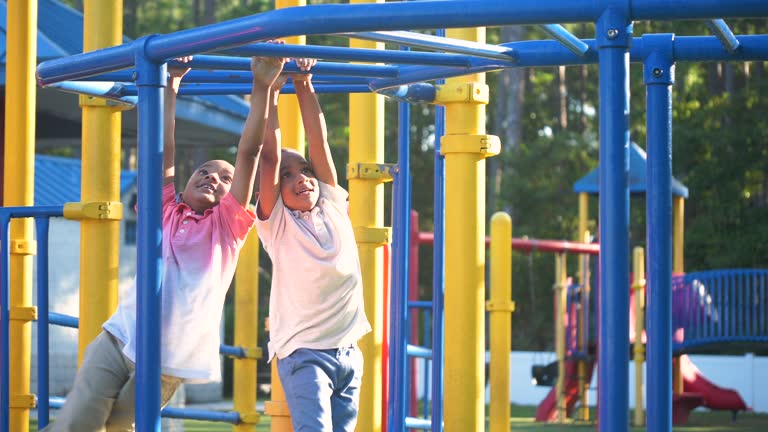
Watch kids at any playground and you’ll notice patterns. Some are climbers—they want to scale everything, testing their limits vertically. Others crave rhythm and movement—they’re naturally drawn to swings where they can pump their legs and feel acceleration. Some kids want social experiences, gathering in groups. Others seek solitary imaginative play. The best playgrounds serve all these preferences simultaneously.
This is why successful Australian family backyards combine different equipment types rather than choosing just one. A setup including swing sets, climbing challenges, and hideaway spaces accommodates every child’s natural play inclination. Kids self-direct to equipment matching their mood.
The Overlooked Importance of Slides
Here’s something many parents miss: childrens outdoor slides aren’t frivolous fun—they’re developmental tools. When kids climb a slide ladder, they’re working on gross motor coordination and problem-solving. The descent teaches body awareness and control. The whole experience builds confidence.
Moreover, slides create natural transitions between different activities. A child climbs to the slide platform, plays there briefly, then slides down feeling like they’ve accomplished something. This loop keeps engagement consistent without requiring constant adult intervention.
Building Engagement Through Complexity
The most underrated principle in playground design is what might be called “progressive challenge.” Equipment that works for four-year-olds but becomes boring at seven is ultimately less valuable than pieces that grow with your kids.
Quality backyard playground equipment should offer multiple difficulty levels. A swing set with adjustable seats and varied swinging styles works from toddlerhood through early teens. Climbing structures with multiple pathways accommodate different skill levels simultaneously, allowing younger and older children to play together safely.
Multi-Activity Zones Create Natural Rotation
Rather than spreading equipment randomly across available space, create activity zones. A climbing zone (with various climbing challenges), a swinging zone (with different swing types), and a sliding zone (with multiple access points) naturally encourage kids to rotate between activities. This rotation maintains engagement and ensures different muscle groups get used.
When zones are thoughtfully arranged, children flow between them—climbing to a platform, descending a slide, playing briefly in a hideaway, then moving to swings. This natural progression keeps outdoor play sessions extended and genuinely active.
Social and Solitary Needs
Some playground equipment is inherently social—swing sets with multiple seats encourage conversation, racing, and shared rhythm. Other equipment supports solitary play—hideaway spaces where single children can build imaginative scenarios. The best playgrounds include both.
Don’t underestimate the value of spaces where kids can play alone. A child building an elaborate fort in a cubby space is developing crucial imaginative and problem-solving skills. A group of kids racing on swings develops social coordination and friendly competition.
What Kids Tell You
Watch your children over several weeks and they’ll reveal what actually engages them. Some kids return to swings constantly. Others barely glance at them. Some love climbing challenges; others prefer imaginative play spaces. This observation guides smart equipment choices.
When parents build playgrounds around their actual kids rather than generic ideas of what kids “should” want, engagement skyrockets. The most-used playgrounds are those that reflect genuine family preferences, not showroom appeal.
The Lasting Benefit
Kids who grow up in diverse, engaging outdoor play environments develop stronger physical skills, greater confidence, and healthier habits than peers with limited options. More importantly, they develop genuine affection for outdoor activity that often extends into adulthood. That payoff justifies thoughtful equipment selection from the start.
